Cooking truly engages all your senses, from the sizzle of meat in the pan to the smell of cookies in the oven. And the satisfaction that comes from feeding the people you care about is unmatched. But sometimes those odors can linger longer than you like.
Cooking truly engages all your senses, from the sizzle of meat in the pan to the smell of cookies in the oven. And the satisfaction that comes from feeding the people you care about is unmatched. But sometimes those odors can linger longer than you like.
One of the most important but often overlooked elements in your kitchen is your range hood. You may not even notice it if it’s working properly. But if it isn’t adequate for the job, it can ruin your cooking experience by leaving your kitchen full of unwanted smells, grease, and even unhealthy gases.
Is your range hood right for you? Read on for answers.
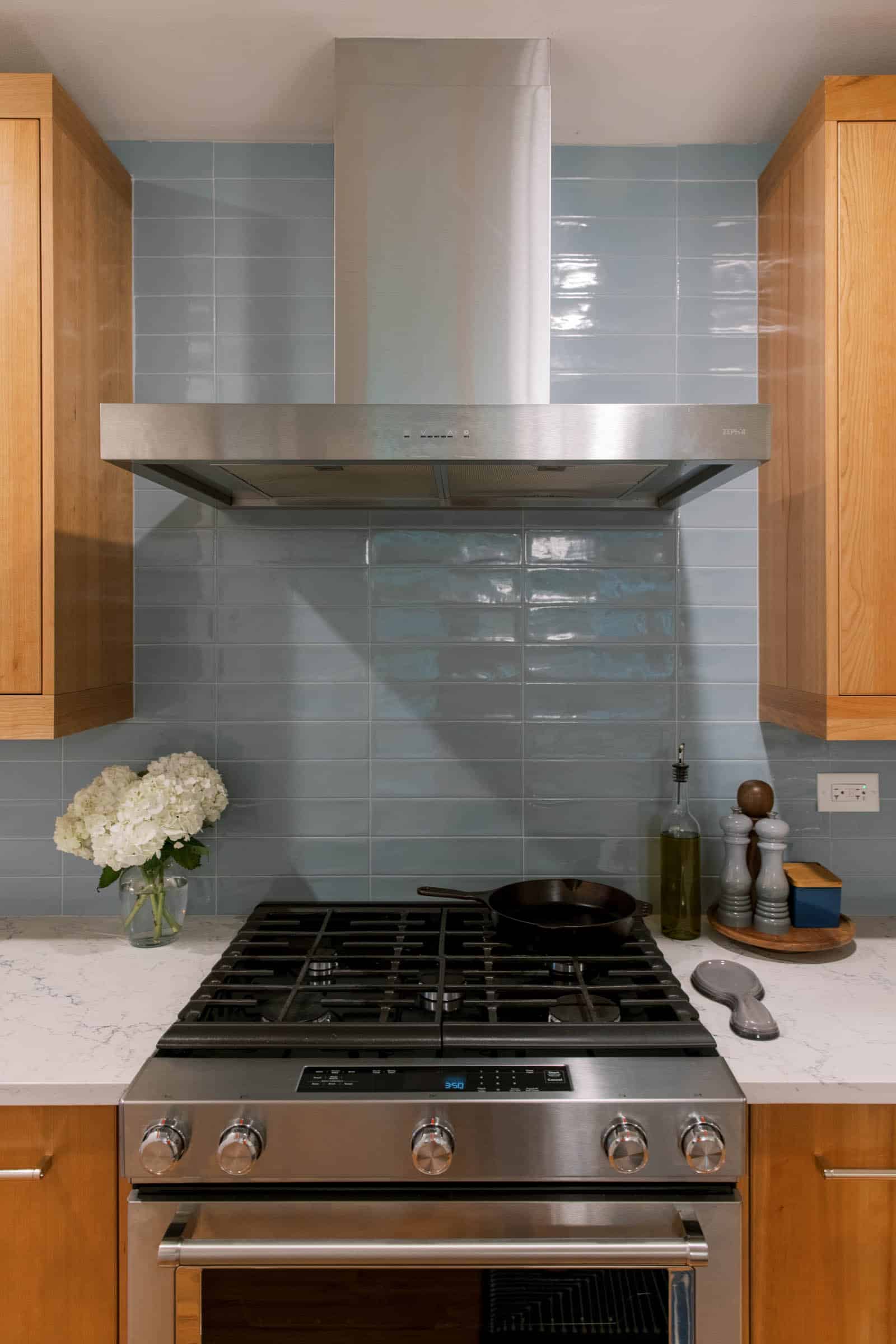
Kitchen Range hoods come in a lot of materials and styles but for pure function its hard to beat a stainless steel hood.
McManus Kitchen and Bath is a full service remodeling company with an in-house design team and showroom right here in Tallahassee, FL.
We work exclusively with homeowners to help them remodel using a design-build approach that saves time, avoids confusion and creates better results.
There’s so much more to range hoods than meets the eye. Range hoods perform a variety of functions in your kitchen. They are necessary whether you have a gas, electric, or induction range, although they are far more critical if your range is powered by gas. A side effect of homes becoming more energy efficient is that they’re much more airtight–meaning that harmful gases can’t escape. As a result, indoor air has become much more polluted than outdoor air in many structures, according to EPA studies.
Gas ranges can fill the air with carbon monoxide, carbon dioxide, nitrous oxide, formaldehyde, and tiny bits of food and grease particles. While electric and induction ranges don’t release all those gases into the air, cooking with them does lead to grease, smoke, and food particles in the kitchen air that should be ventilated.
Range hoods keep your kitchen
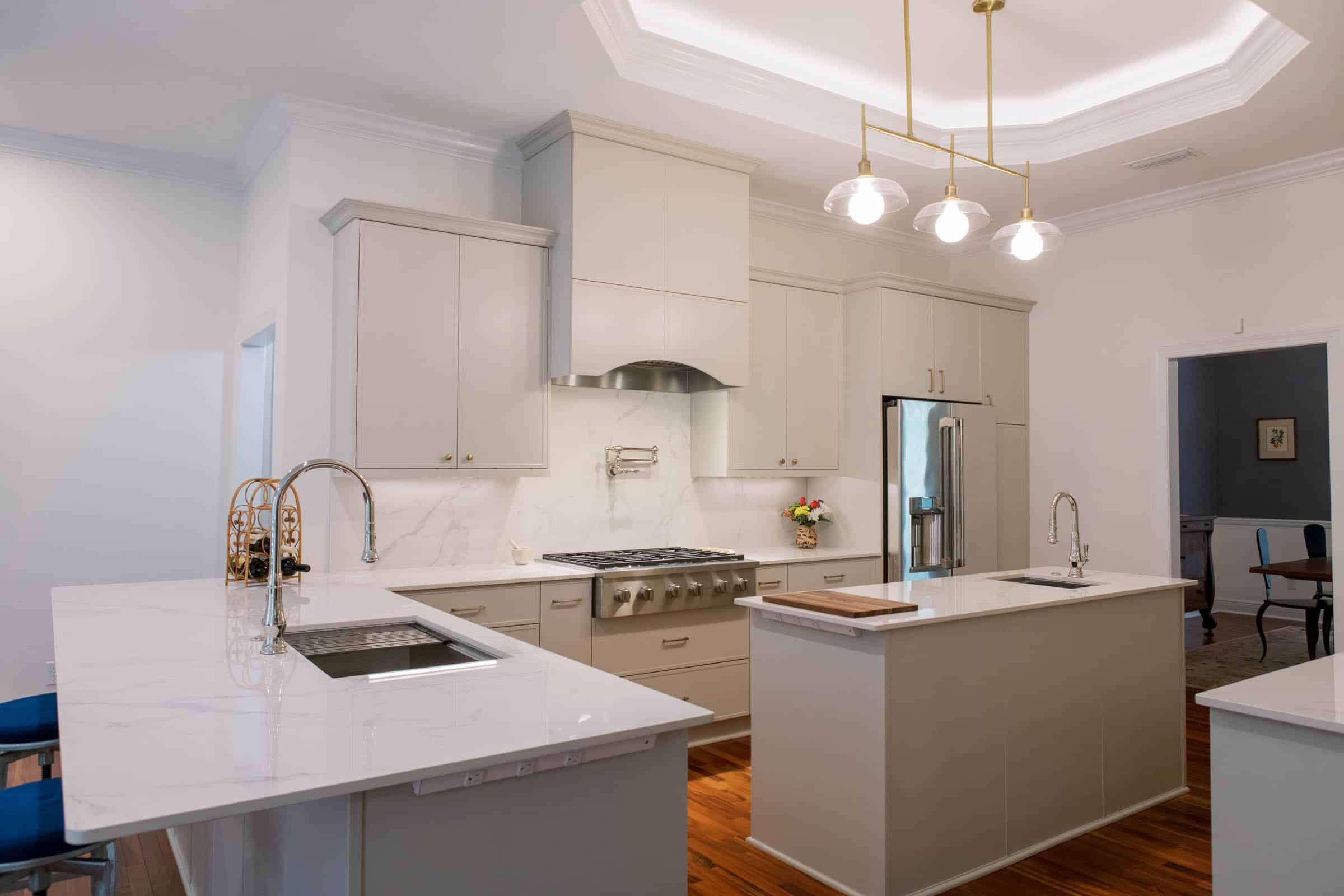
Wood hoods like this one can match or contrast you cabinetry. They have metal inserts that include the blower and lighing.
Range hoods come in so many different looks that you’re sure to find one that is perfect for you. You can feature your range hood as a focal point in your kitchen or have it blend in. You can choose stainless steel, white, mixed colors like black and gold, or a complementary color. Range hoods can be tiled to match your backsplash or framed in wood for a farmhouse look. You can leave the design simple and add trim at the bottom for a little detail. You can even cover the range in marble to match your countertops or island. The sky is the limit.
There are many aspects of a perfect range hood to consider besides the aesthetic. Read on for help in understanding what makes for a great ventilation system in your kitchen.
Here are some things to Consider:
CFM measures how many cubic feet per minute of air is removed from your kitchen–and generally, the higher the better. For many in-home ranges, 400-600 CFMs is enough, but for bigger ranges and professional ranges, like 36-48” models, you will want 900-1,500 CFMs. Professional range hoods run at about 1,000-1,500 CFMs, which means that the air in a small room is being changed every minute. While you may not need something quite that powerful, you definitely want the air changed every four minutes.
Keep in mind that a higher CFM will lead to a louder range hood. When you buy a hood or a blower (more on that later), pay attention to the sones rating as well. Sones are measurements of sound–the lower the sone, the quieter the motor. Most ranges operate between about 6 to 10 sones. Better hoods come with remote blowers that are mounted in the attic or outside instead of at the range so they are much quieter.
Your range manufacturer will specify the size and CFM that is right for the range you choose. But also take into account the size of the kitchen and range, whether your kitchen is part of an open floor plan or is more closed, how long the ventilation ducts are, how many bends the ducts have, and whether you have an external vent cap. A contractor can help you figure out your ideal amount of CFMs.
For your range hood to properly ventilate your kitchen, you need your ductwork to be in good working order. The best-case scenario would be the ducts extending either straight up to the roof or straight back through an exterior wall. But often, you’ll need a longer duct run that includes bends, or elbows. It’s best to make the run as short as possible and include as few elbows as possible. Use the widest ductwork you can, and make sure it’s stainless steel so it doesn’t collect grease and grime.
Capture area refers to the height, width, and depth of the hood. The bigger the capture area, the more air, smoke, steam, grease, and gases the hood can remove. It’s especially important to have sufficient capture area over the front burners, where most of the cooking generally happens. Plan for a 24-inch capture area if you cook a lot. The lack of a large capture area is one of the problems with smaller range hoods and downdrafts.
How far above the range should the hood be? That depends on what type of range you have.
Your range hood specs will tell you how high you can mount your hood. Building code default to manufacturer specifications for kitchen ventillation.
It’s important to have fresh air brought back into the kitchen via your HVAC system when you’re pulling air out with the range hood. Especially in a closed-in kitchen, if you don’t replace the air that is being removed, it will be pulled from somewhere else, like the attic or garage. This means you’re not filling your kitchen with fresh, clean air. This is called backdrafting. But there’s a simple solution: install what is called a 'make up air' vent to bring fresh air back into the room to make up for what the range hood is removing.
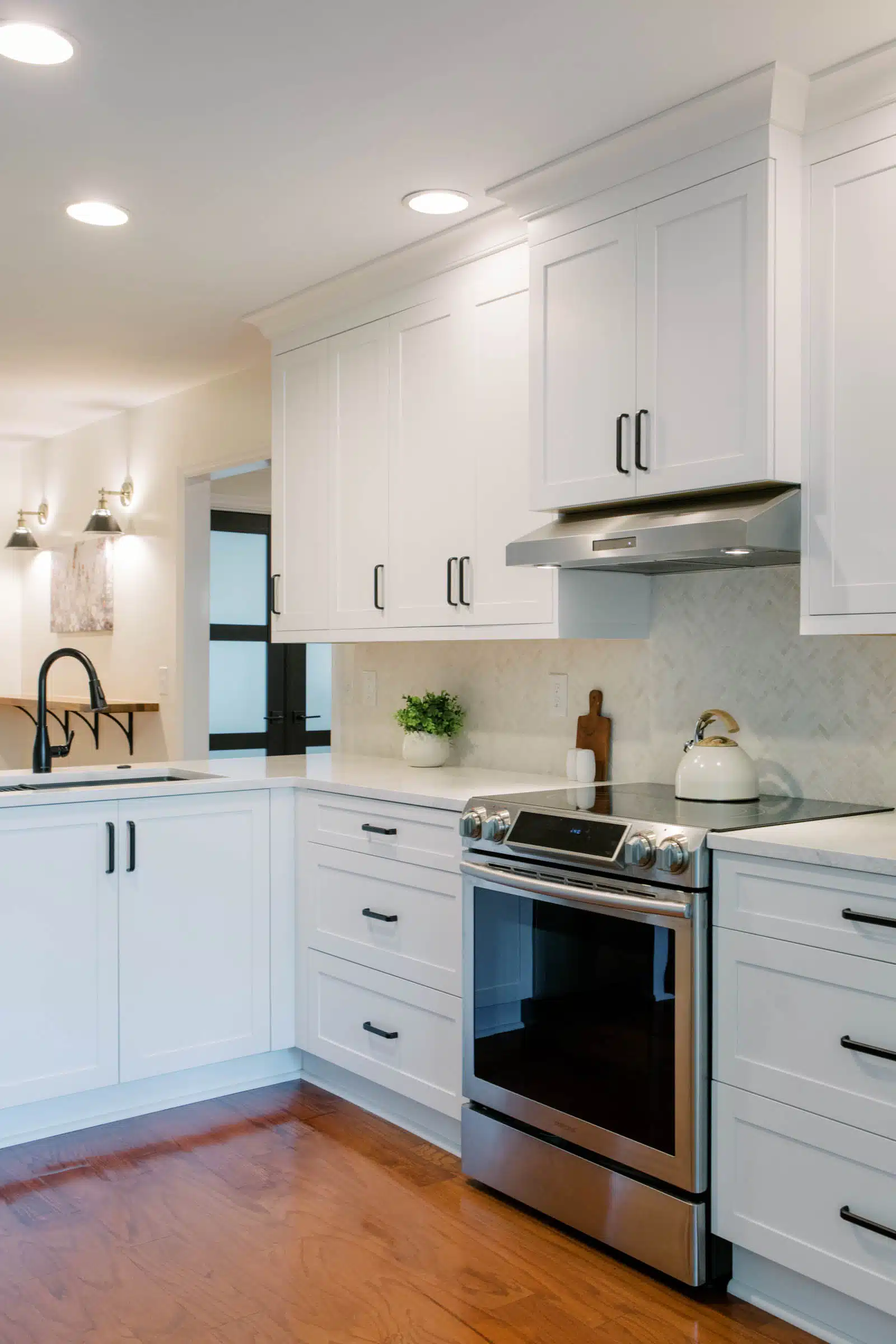
Undercabinet range hoods are simple and inexpensive.
There are several options available, with pros and cons for each type. Think about the size and layout of your kitchen and how often you use your range when deciding what type is best for you. Some options include:
The range hood blower is an important part of the functionality of the appliance. The blower is the motor that sucks the dirty air out of the kitchen and pushes it outside. There are a few different options for blowers: internal, external, and in-line or remote blowers.
Internal blowers are built right into the range hood. This means they’re easy to clean and to service if they have a problem. They are louder, though, since the motor is right there in your kitchen. External blowers are outside. They generally pull higher CFMs and are a little bit quieter. Because of their location, they’re harder to service when they need it. In-line or remote blowers are installed in the ducts. They pull high CFMs and are quieter than the other two options. Placement is important though–you want them to be installed where they can be accessed and serviced when needed.
Just like many appliances and features in today’s kitchens, we’re seeing a lot of upgrades and smart technology in range hoods. Some available options include
Keep your range hood working well and looking great with a little maintenance. Wipe it down regularly, especially after a particularly greasy cooking session. Change or wash the filters frequently. Check the vent every now and then to make sure it’s not blocked. And wash the fan blades to prevent a build-up of grease and grime. Take good care of your range hood and it’ll continue to provide you with fresh, clean air in your kitchen for years to come.
Decorative range hood with a wood accent
Are you ready to install or replace the kitchen range hood in your Tallahassee home? It’s an investment that promises cleaner air, a better cooking experience, and some added style! And we can help. From answering technical questions to helping with design to providing installation, we can handle all your kitchen remodeling needs. Contact McManus Kitchen and Bath today and let us help you make your kitchen the perfect place to cook for your family and friends.
In Tallahassee’s premier neighborhoods kitchens are no longer utilitarian spaces. They are architectural statements. …
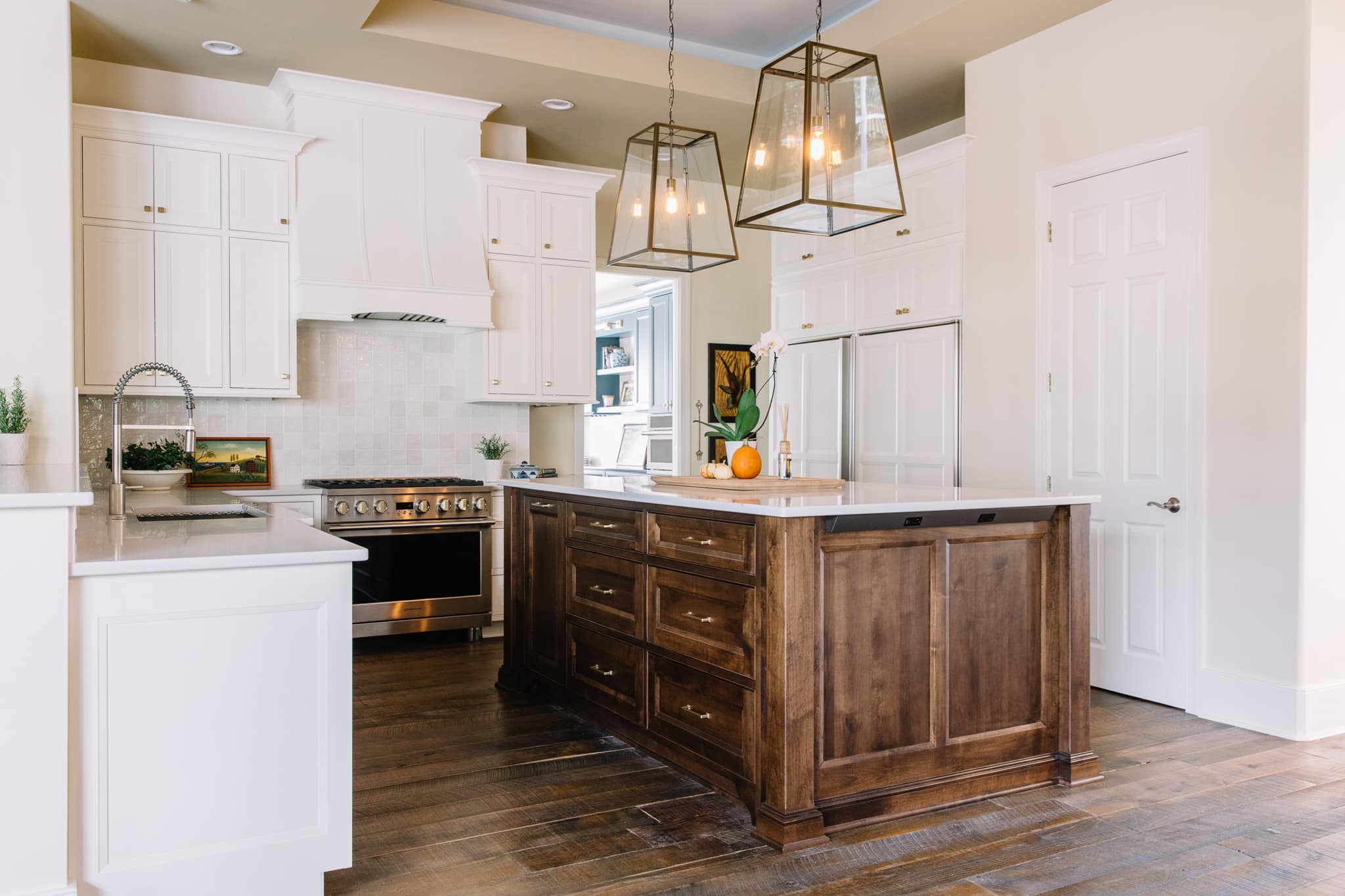
A stunning white kitchen with a cozy brown island and a sleek, integrated refrigerator.

Contact Us
What you’ll get:
A personal design consult in our showroom
3D drawings to help you visualize options
A ‘good-better-best’ estimate