You’ve got the plans, the Pinterest board, and the design vision. Now you just need the cash to make it happen. If you're not paying out of pocket, a HELOC or another type of renovation loan might be exactly what you need.

You’ve got the plans, the Pinterest board, and the design vision. Now you just need the cash to make it happen. If you're not paying out of pocket, a HELOC or another type of renovation loan might be exactly what you need.
But let’s be real—loan options can feel like alphabet soup. 203K? HomeStyle? HELOC? Which one’s right for your kitchen or bath remodel?
Let’s walk through it together. This guide breaks down the three most popular types of home renovation loans so you can pick the one that fits your project best.
Great for fixer-uppers
Combines mortgage and renovation into one
Available as Limited (cosmetic) or Standard (structural)
Flexible for upgrades and additions
Allows luxury projects (like landscaping)
Works for second homes and rentals too
Borrow only what you need, when you need it
Based on your home’s equity
Ideal for smaller or phased projects
Renovation loans are designed to help pay for home improvements that a regular mortgage won’t cover. They’re perfect if you’re buying a fixer-upper or just want to upgrade the home you already love.
These loans bundle materials, labor, and design costs into one tidy package. That means fewer bills to juggle and a clearer view of your budget.
You can use a renovation loan for things like:
Kitchen or bathroom remodels
Accessibility improvements
Fixing up an older home
Structural repairs or additions
Now, let’s look at the three most common loan types.
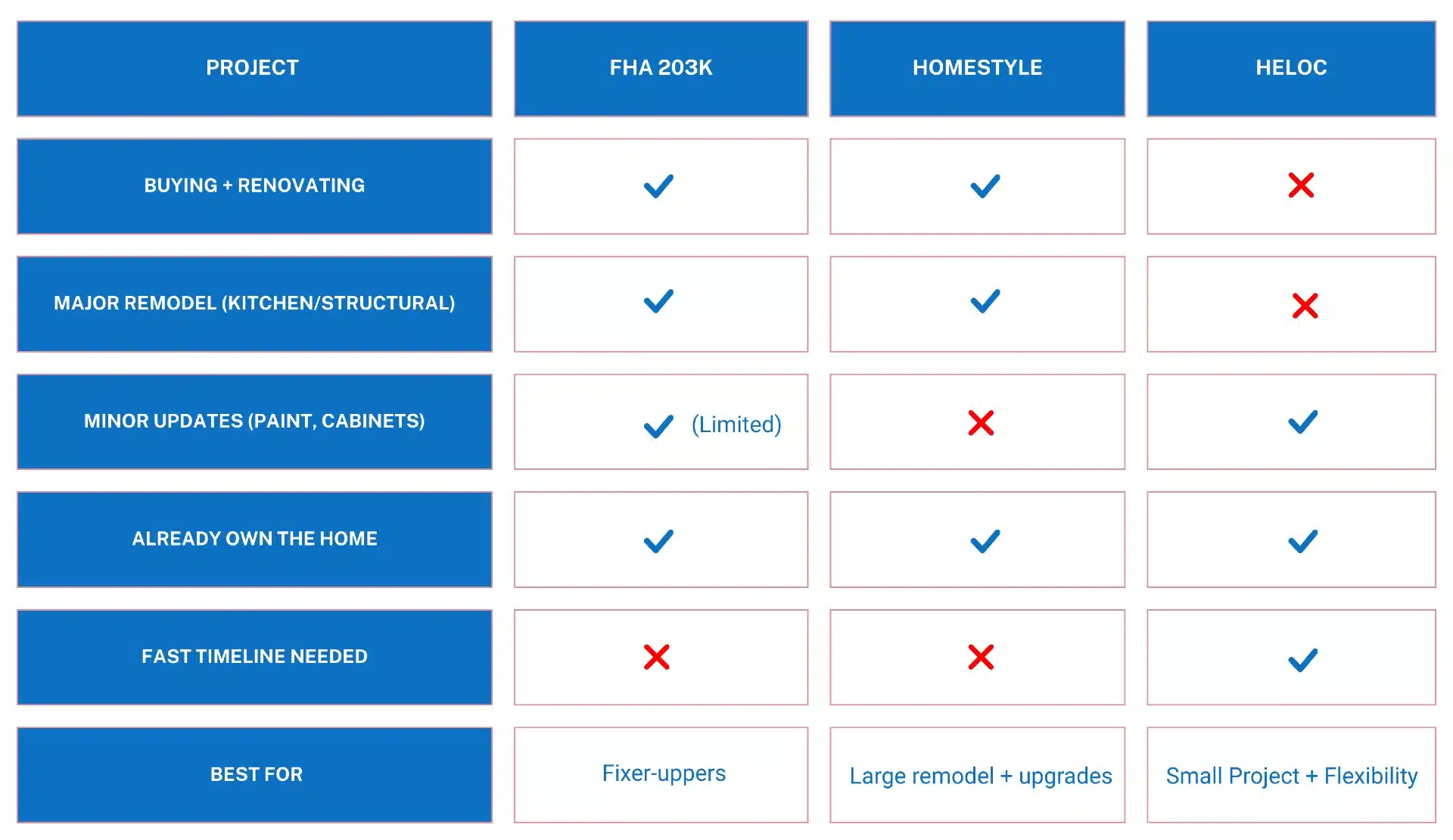
An FHA 203K loan combines a mortgage and renovation loan into one. It's backed by the government and works well if you’re buying a home that needs repairs—or updating the one you’ve already got.
Two Options
Limited 203K: Covers up to $35,000 in non-structural repairs (like painting, flooring, or fixtures).
Standard 203K: Allows for bigger projects, including structural changes. But no luxury stuff like pools.
Pros
Lower credit requirements
Small down payment (as low as 3.5%)
Great for buyers without a lot of equity
Cons
More paperwork and longer closing times
You have to use FHA-approved contractors
Extra inspections slow things down
This conventional renovation loan is a good fit for bigger projects—and for people with solid credit. Unlike FHA loans, you can use a HomeStyle loan for second homes, rentals, or luxury upgrades like landscaping and high-end finishes.
Pros
Higher loan limits
Fewer restrictions than FHA loans
Can be used on investment properties
Cons
Requires higher credit and income
Still involves inspections and approvals
Funds are released after work is done, not before
A HELOC lets you borrow money based on your home’s equity. It works a bit like a credit card—you draw what you need, when you need it, then pay it back over time.
This makes a HELOC ideal for smaller or phased renovation projects.
Pros
Quick to open, often in just a few weeks
Super flexible—you borrow only what you use
Perfect if you already own your home
Cons
Your home is the collateral (so there’s risk)
Interest rates can go up or down
Not ideal for large or full remodels
Applying for a home improvement loan can seem like a lot—but it doesn’t have to be overwhelming. Start by pulling together the basics:
Income docs and pay stubs
Credit history
A rough scope of work
A contractor bid (some lenders ask for this upfront)
HELOCs are the fastest to close—usually within 1 to 3 weeks. FHA and HomeStyle loans take a little longer, around 30 to 60 days.
Your contractor plays a huge role in the renovation loan process. Some don’t accept projects tied to 203K, HomeStyle, or HELOC loans because of the way payments are structured.
That’s why it’s super important to work with someone who’s familiar with renovation financing.
Loan funds are paid in stages, not all at once
Inspections are required before each draw
Paperwork must be done right to avoid payment delays
If your contractor isn’t on board with this, it’s best to find someone who is.
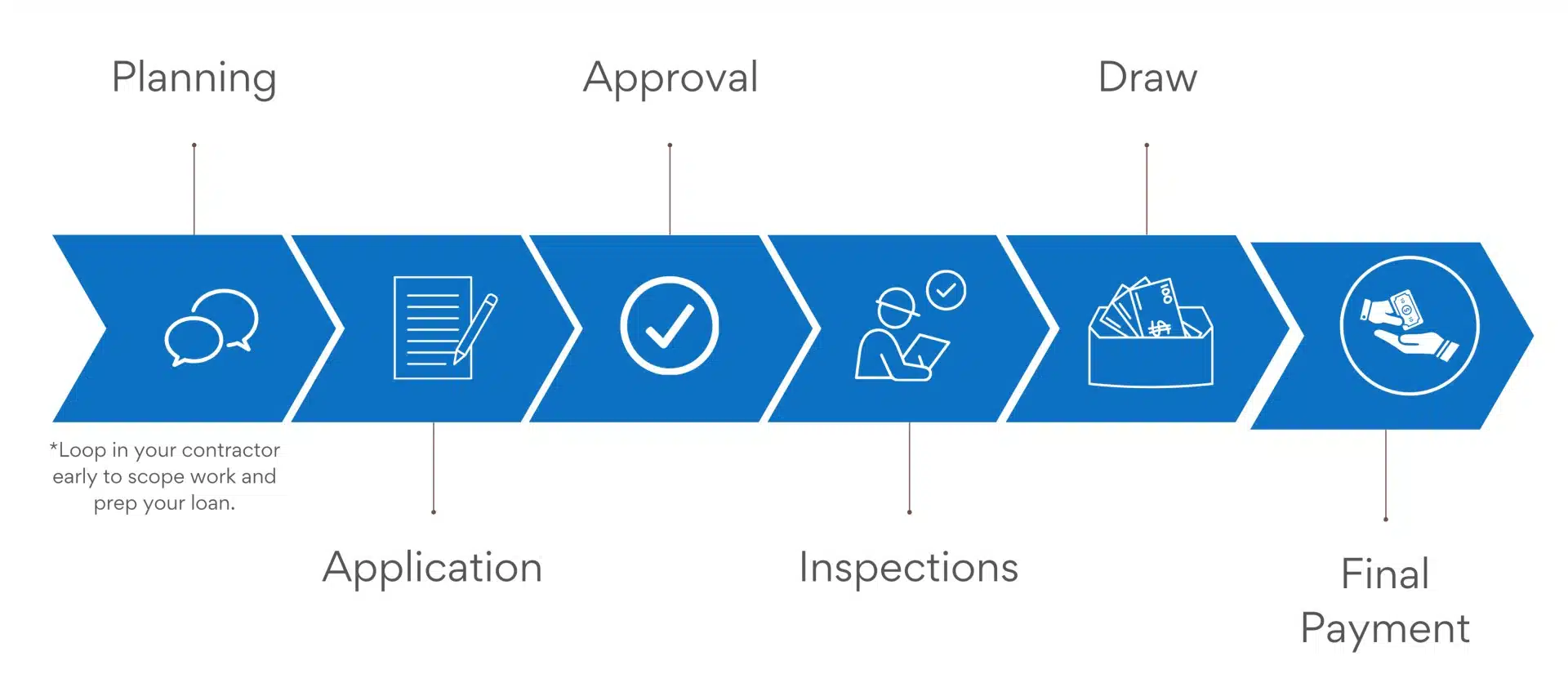
Most lenders need a written proposal with a breakdown of labor and material costs. Once approved, funds are released in two to four draws based on progress.
Loan inspectors check the work before each payment goes out. That’s a good thing—it keeps everyone accountable and on schedule.
If you’re in the Big Bend area, the Building Industry Association of the Big Bend (BIABB) has a great directory of renovation-friendly lenders. A few to check out:
Prime Meridian Bank – Offers mortgages and HELOCs with local insight
University Lending Group – Great for first-time buyers and reno loans
You can browse the full BIABB directory here.
Not in our area? Want a digital-first experience? Here are some solid options:
RenoFi – Specializes in renovation loans
Rocket Mortgage – Offers 203K and equity-based options
SoFi – Great for HELOCs and personal loans
Better.com – Fast online pre-approvals
Our cost calculator shows you real numbers for your future project—so you’ll know how much you might need to borrow.
Renovation loans take time. Between choosing a lender, getting your paperwork in order, and syncing with your contractor, you’ll need a good head start.
If you're hoping to renovate within the next 6–12 months, apply for your loan now. That way, you'll have the time you need to make smart choices—and avoid last-minute stress.
Choosing the right home renovation loan depends on your timeline, budget, and how much flexibility you want. Whether you go with a 203K, HomeStyle, or HELOC, the key is to plan ahead and keep your contractor looped in from day one.
Still unsure what fits best? We’re happy to help. Reach out anytime to chat about your remodel, and we’ll point you toward the best financing options for your project.

Home improvement tax credits and rebates have been around for a long time. The City of Tallahassee is well known for …


One contractor says the project will cost $60,000. Another says $95,000. A third says $140,000. How can the same proj…
What you’ll get:
A personal design consult in our showroom
3D drawings to help you visualize options
A ‘good-better-best’ estimate