
We searched hundreds of review sites for common complaints about bad contractors and bad homeowners. The results were interesting.

We searched hundreds of review sites for common complaints about bad contractors and bad homeowners. The results were interesting.
Common Ground
The complaints had a lot in common. For example homeowers complained about 'surprise costs' and contractors complained about 'additional work added after start'.
Turns out both contractors and homeowners are complaining about the same core issue: a lack of clear expectations, good communication and reporting.
Let’s break it down.
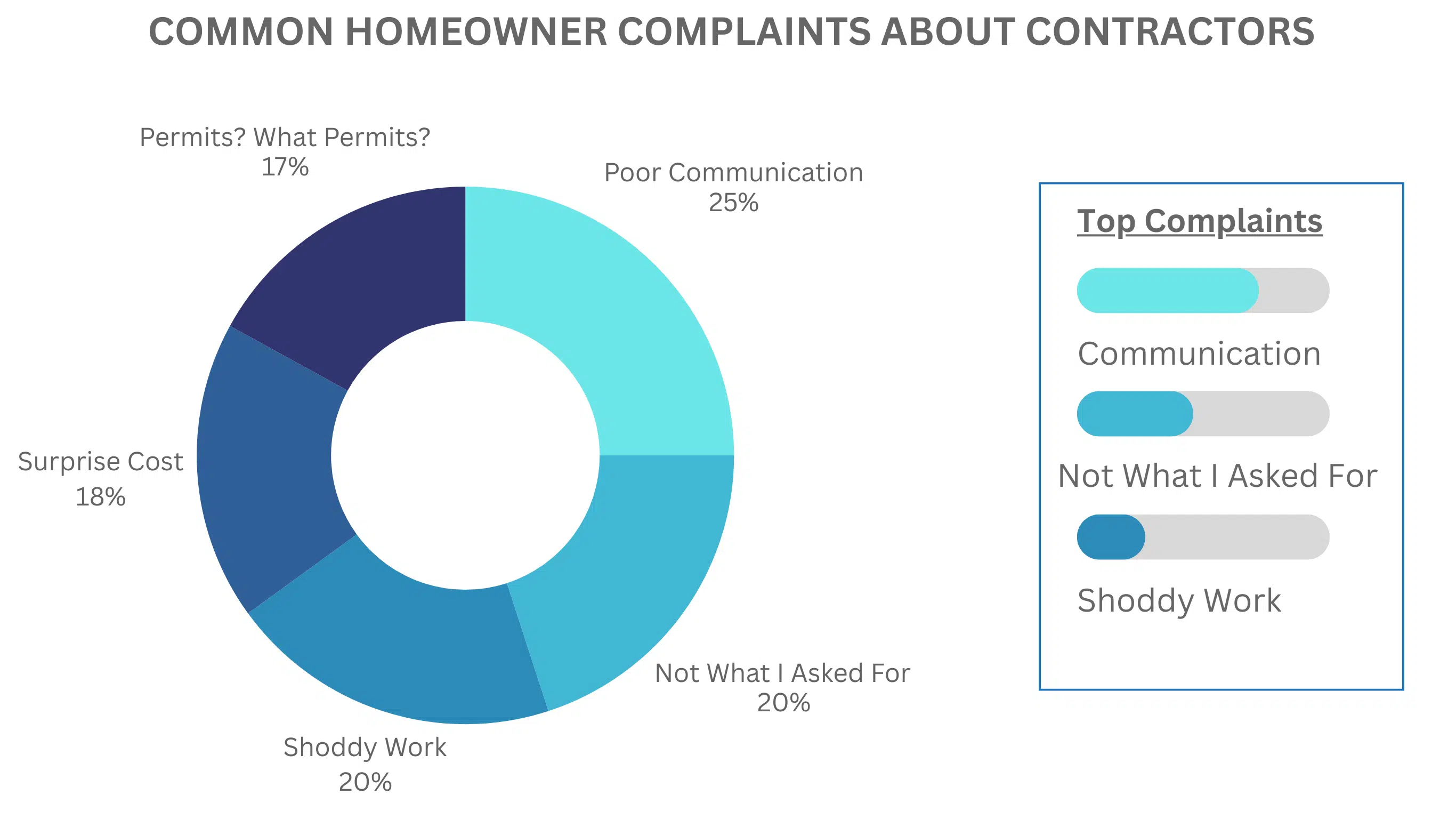
Poor communication was the most common homeowner complaint
Topping the list is contractors who don’t do what they say they’ll do when they say they’ll do it.
Unreturned messages, showing up announced, not discussing problems or added costs in a timely manner all topped the list of complaints about poor communication.
Unclear pricing and surprise costs put homeowners in a tough spot, often forcing them to pay more than expected just to complete the project.
Homeowners often feel like their vision gets lost in translation. When the final result doesn’t match what they discussed, it leads to frustration, do-overs, and extra costs.
Contractors who skip permits or ignore building codes put homeowners at legal and financial risk. These shortcuts can result in fines or unsafe living conditions.
Some contractors used cheap materials and rush jobs, leaving homeowners with subpar results. When repairs become necessary, it’s frustrating to pay twice for the same project.
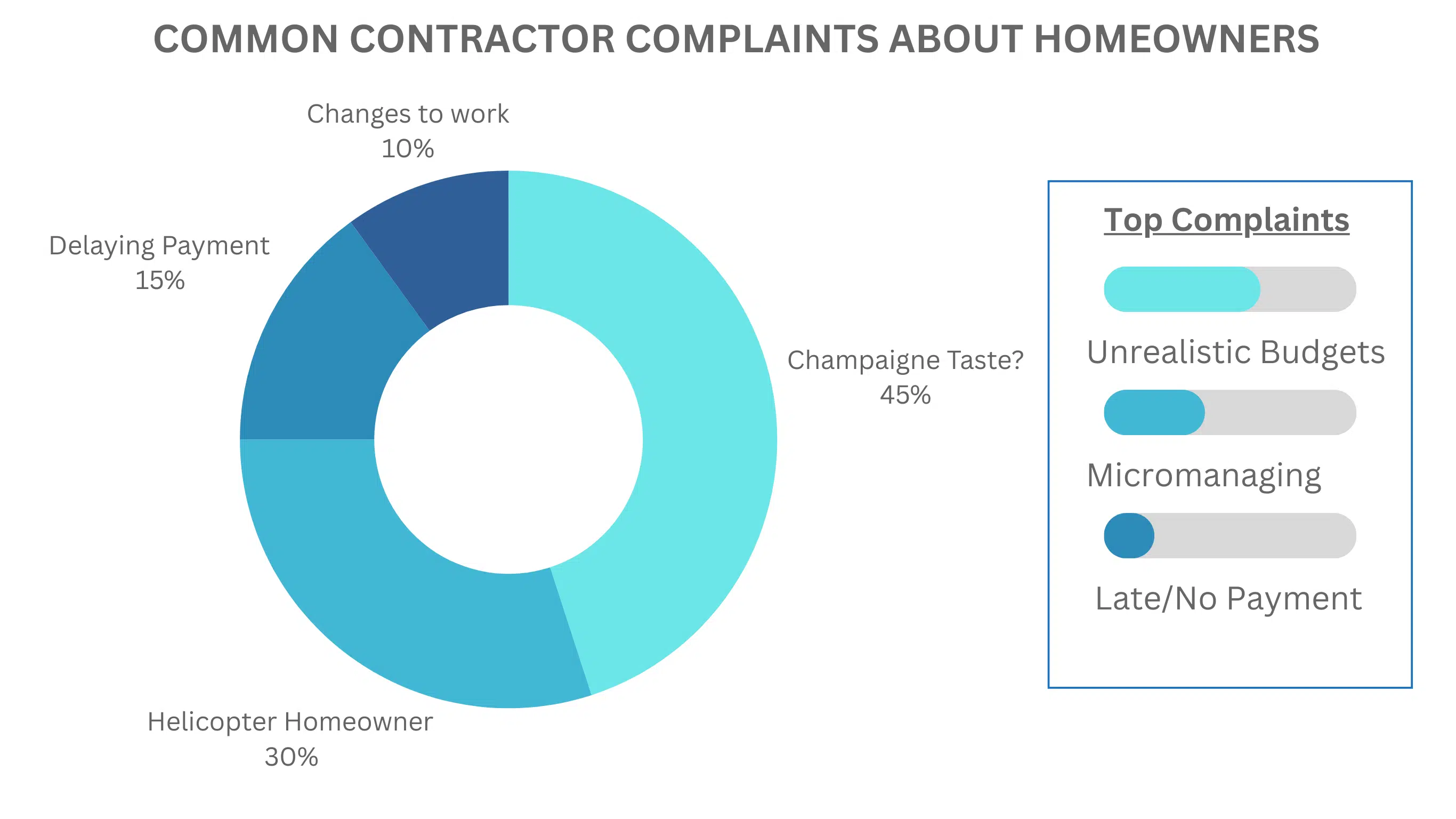
Unrealistic budgets was the most common contractor complaint
But difficult issues aren’t confined to the homeowners’ experiences. Sometimes, contractors have trouble with homeowners who aren’t playing fair.
Low budget expecations were the number one complaint. Often forcing contractors to cut corners on materials and workmanship to meet their demands.
Micromanaging the job was a another big complaint. Homeowners constantly second guessing and asking questions of installers slows down progress and increases costs.
Delaying payments or trying to renegotiate after work is completed can wreck and trust between the contractor and homeowner.
Another big complaint is homeowners adding or changing things after the project starts. Changing things mid projects is time consuming and expensive.
We started McManus Kitchen and Bath ten years ago because we were tired of the same broken process. As contractors, we were frustrated by poor communication with design partners and local vendors. So we built a different kind of company — one with a fully integrated process under one roof.
The result? A remodeling experience that’s less stressful, more efficient, and delivers the results you expect — on time and on budget.
There is a lot of advice out there about "getting 3 bids" or asking for referrals to select your contractor.
But these alone are not enough. You have to be able to evaluate each contractor and compare 'apples to apples'.
Just because your friend had a good experience with someone does mean you will. Your friend could have lower standards that you, the job could have been simpler, or maybe the contractor just got lucky on that project.
Referrals are a good place to start but you want to aks questions about the the contractors sytems and processes to make sure you are dealing with a professional.
The best contractors have a clear plan to avoid these issues from the very start. Their systems should be outlined on their website and they should explain them as part of the estimate process.
If a contractor does not have clear answers to questions like that they might not be the best choice for your project.
From there very first phone call with your contractor you should feel like you understand the process and what the next steps are. You should never feel "left in the dark".
There is a lot of advice out there about "getting 3 bids" or asking for referrals to select your contractor.
But these alone are not enough. You have to be able to evaluate each contractor and compare 'apples to apples'. Comparing their remodeling process is the best way to do this.
Just because your friend had a good experience with someone does mean you will. Your friend could have lower standards that you, the job could have been simpler, or maybe the contractor just got lucky on that project.
The best contractors have a clear plan to avoid these issues from the very start. Their systems should be outlined on their website and they should explain them as part of the estimate process.
If a contractor does not have clear answers to questions like that they might not be the best choice for your project.
From there very first phone call with your contractor you should feel like you understand the process and what the next steps are. You should never feel "left in the dark".
1-2 Weeks
Get a realistic estimate with 3D concept drawings
6-8 Weeks
We finalize all the details and order all your materials.
3-4 Weeks
Your project team prepare everything for project start.
8-10 Weeks
Project manager is on site daily for quality control.
5 Years
6 month 'tune up' visit and a 5 year warranty on all work.
The best contractors all follow a similar process. These are proven best practices that are taught in training programs across the country.
There are 5 Core Processes a contractor should have: An Estimate Process, A Design Process, An Ordering and Planning Process, A Construction & Project Management Process and A Warranty and Follow Up Process.
An estimate is not just a quote, it is not just about 'making the sale'. It is where the first expectations are set and met, exceeded or not met.
As we explained above a successful remodel is all about the contractor's ability to set clear expectations and then meet or exceed them.
You can tell a lot from the intial call and follow up after the call. But even before that check out the contractors website. The best contractors have well designed website that clearly outline how they work, common costs, and what to expect.
The initial phone call should be professional and follow a clear process. If a contractor answers on a noisy job site, seems distracted or disinterested that is a red flag.
On the call they should clearly explain the estimate process, the best way to schedule, and how long to expect it to take.
The best contractors will follow up with an email or text to summarize the call and confirm the next steps. They will send an appointment reminder before visiting your home, they will call ahead or notify you if they are running late.
After visiting your home the contractor should explain when you can expect the estimate, they should send an appointment summary to confirm what was discussed and next steps and they should delivery the estimate when promised.
Ideally you would meet in person with the contractor to gover the estimate in person so you can ask questions and make sure you understand everything.
What to look for:
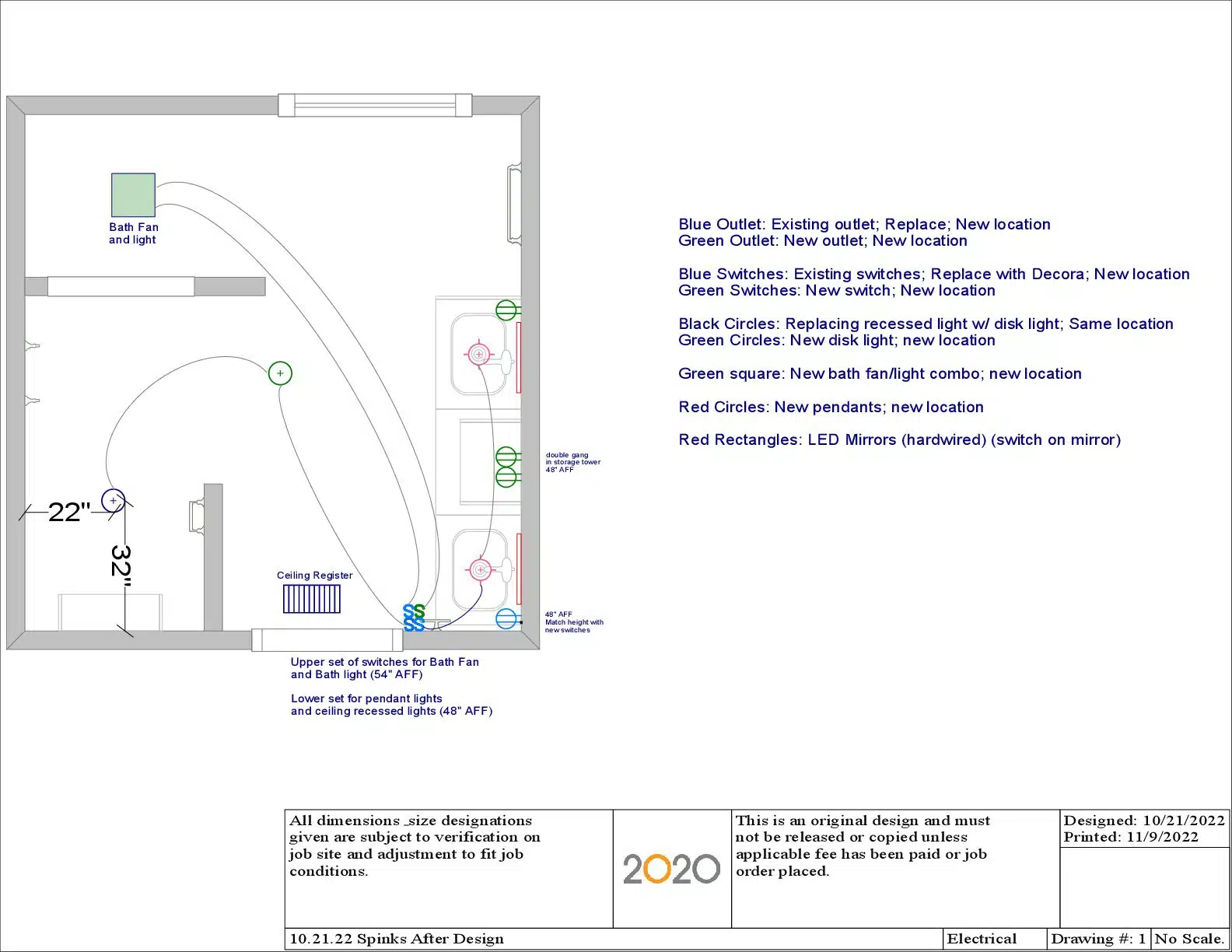
An example of the electric plan for a mid sized bath remodel
3D renderings are helpful to visualize the final result but you also want detailed plans that specify exactly where things go.
A successful project is all about details... the exact location of plumbing and electric fixtures, the tile pattern, cabinet height etc... exact material selections, color and pattern.
Too many contractors rush the design and planning process and that creates a lot of the common issues discussed about.
The better the planning, the smoother the project.
Typically we have 2-4 design meetings for a kitchen or bathroom remodel. We also will visit your home 2-3 times to meet with installers, engineeers and review plans.
During design we are choosing the exact materials for your project, getting exact labor costs from our installers so we can create a fixed price proposal.
Also during design, our project managers are reviewing the project to troubleshoot potential issues and create a detailed project schedule.
The project schedule should outline what happens every day on the project and you payment schedule should be linked to project milestones.
After each design meeting we send an appointment summary with update pricing and a summary of decisions made so there are no surprises.
Plans, Elevations and 3D Renderings That should be included:
1. Demo Plan
2. Framing plan - often you need separate plans for walls, roofs, floors etc...
3. Electric Plan
4. Plumbing Plan
5. HVAC Plan
6. Cabinet Plan and
7. General Before/After Plan.
For smaller project these can be combined.
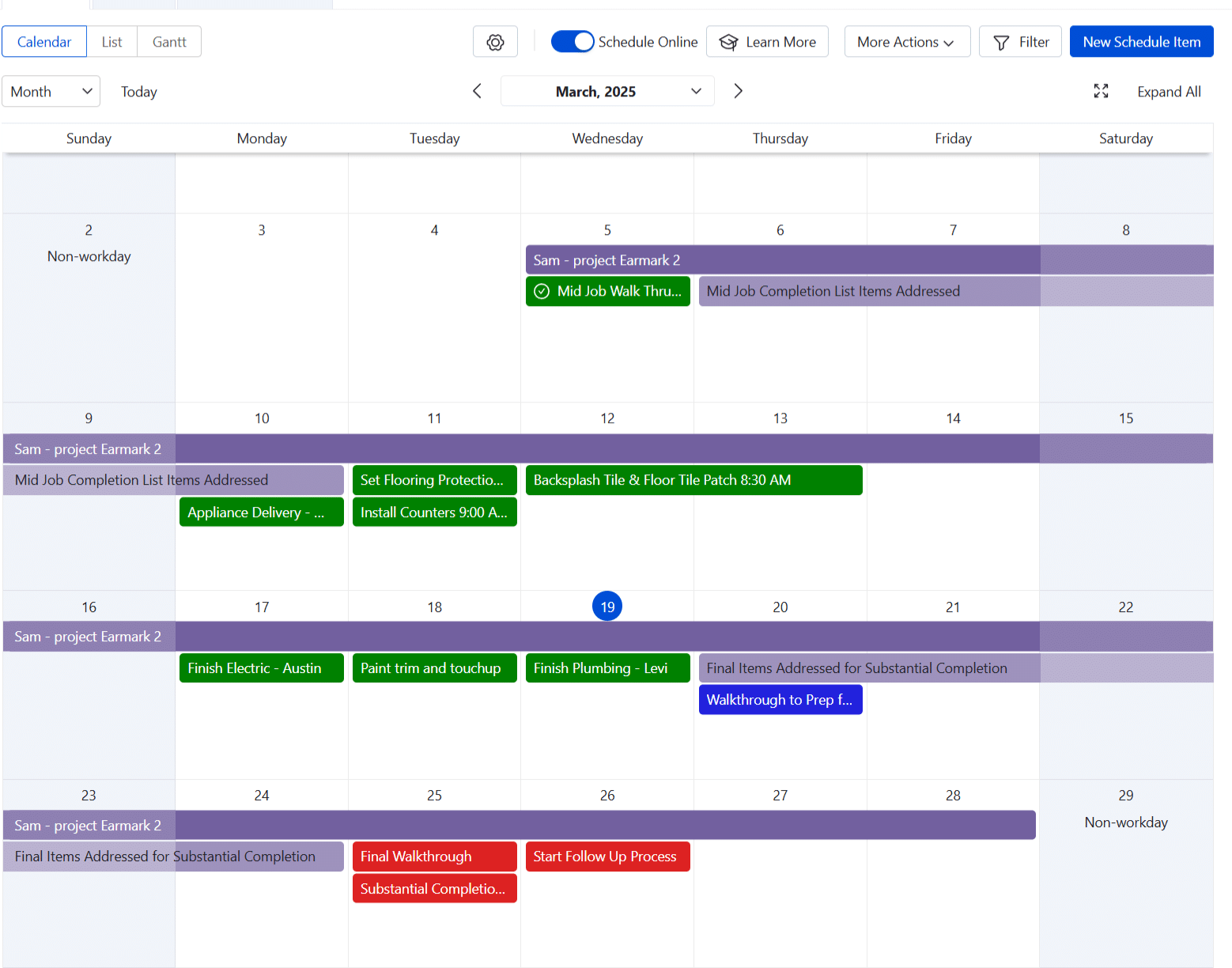
A detailed project schedule is a critical part of any successful project.
Ordering everything right after final contract signing avoid surprise costs increases and unexpected delays from shipping damage or backorders.
During construction the best contractors will have a project manager on site every day to manage quality control and jobsite organization. They will is provide daily updates with project photos every day.
One person should be in charge of all ordering and storage of materials to avoid confusion or miscommuncation. When materials arrive they should be checked for any damage and to make sure the color, size, type etc... are correct before storing them until needed on site
Ideally your contractor would manage all materails but some contractors/deisgners will ask you to handle this.
The preconstruction process is where permits are submitted, schedules are confirmed and everything is lined up for the project.
About 3 weeks before the project start your contractor or project manager should arrange for a 'pre-construction meeting' at your home to discuss things like job site set up, parking etc...
During construction your contractor or project manager should be on site every day to review plans with installers, do quality control checks, make sure the work area is kept clean and to keep you updated.
They should provide daily updates with progress pictures via email or though a project management software.
In addition to daily updates your project manager should schedule formal walkthroughs of the project with you so you can look things over together and make sure you are both satisfied. We schedule 3 formal walkthroughs on most projects.
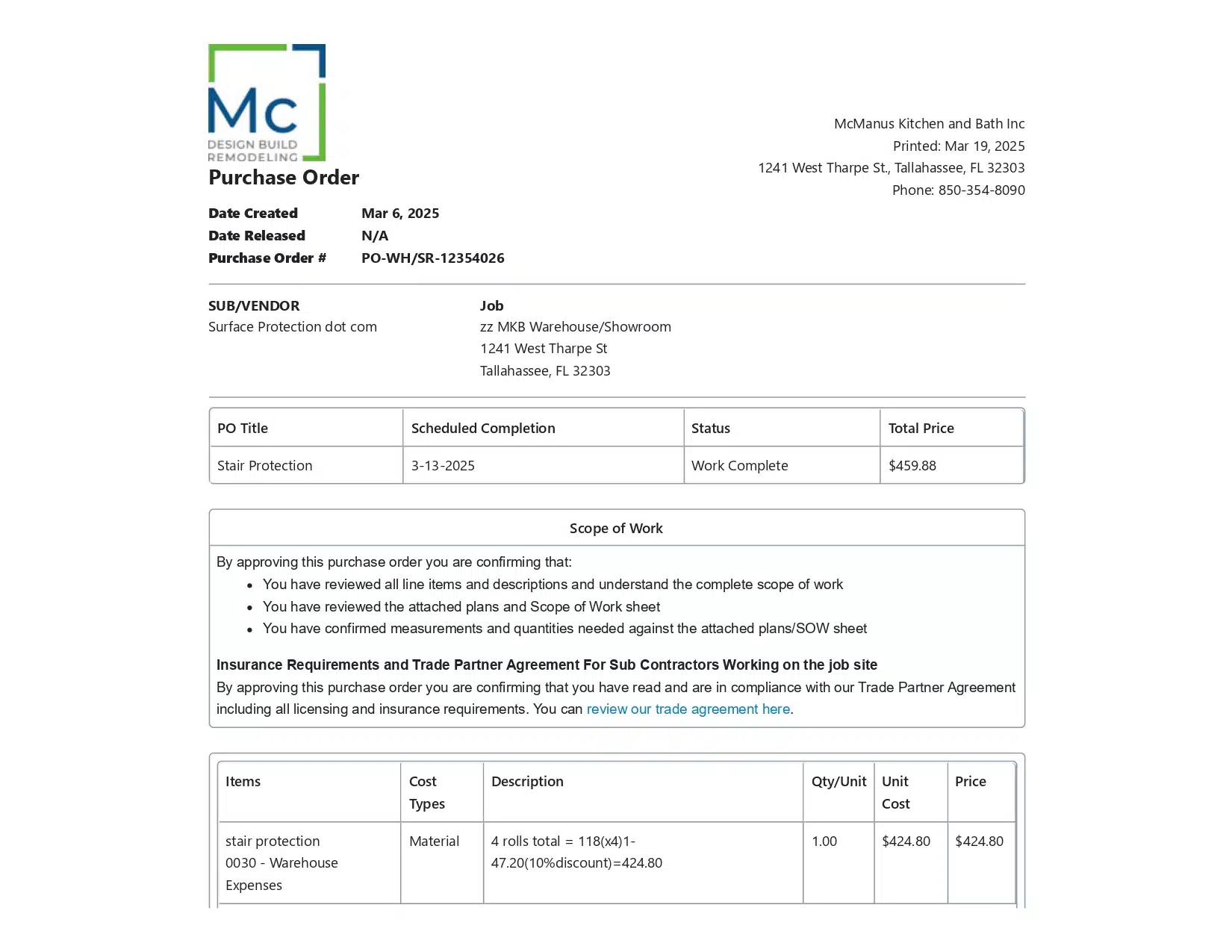
The best contractors use a purchase order system to keep track of all material orders and delivery dates.
The process is not done when the job is done. The best contractors also have a detailed follow up and warranty process.
It's important for the contractor to have a plan to follow up with you a few months after the project is complete to make sure things are working as expected. We like to do a 6 month 'tune up" visit with out clients.
1 year warranties are common. We offer a 5 year warranty on our projects. Each year on the anniversary of your projects completion date will send you an email asking if anything needs to be addressed.
Respect and communication make all the difference. When homeowners and contractors understand each other’s challenges, projects run smoother.
By choosing a trustworthy contractor and maintaining realistic expectations, you can avoid bad contractors and enjoy a stress-free remodel. If you’re looking for a reliable, high-quality contractor in Tallahassee, contact McManus Kitchen and Bath today!
Finding the best remodeling contractor for your project is really about finding a contractor that provides a level of…

Not every contractor is right for every project. Finding the right contractor for your needs can feel overwhelming. T…

Have you ever felt frustrated after hiring someone with great reviews—only to be disappointed by how the project was …
What you’ll get:
A personal design consult in our showroom
3D drawings to help you visualize options
A ‘good-better-best’ estimate